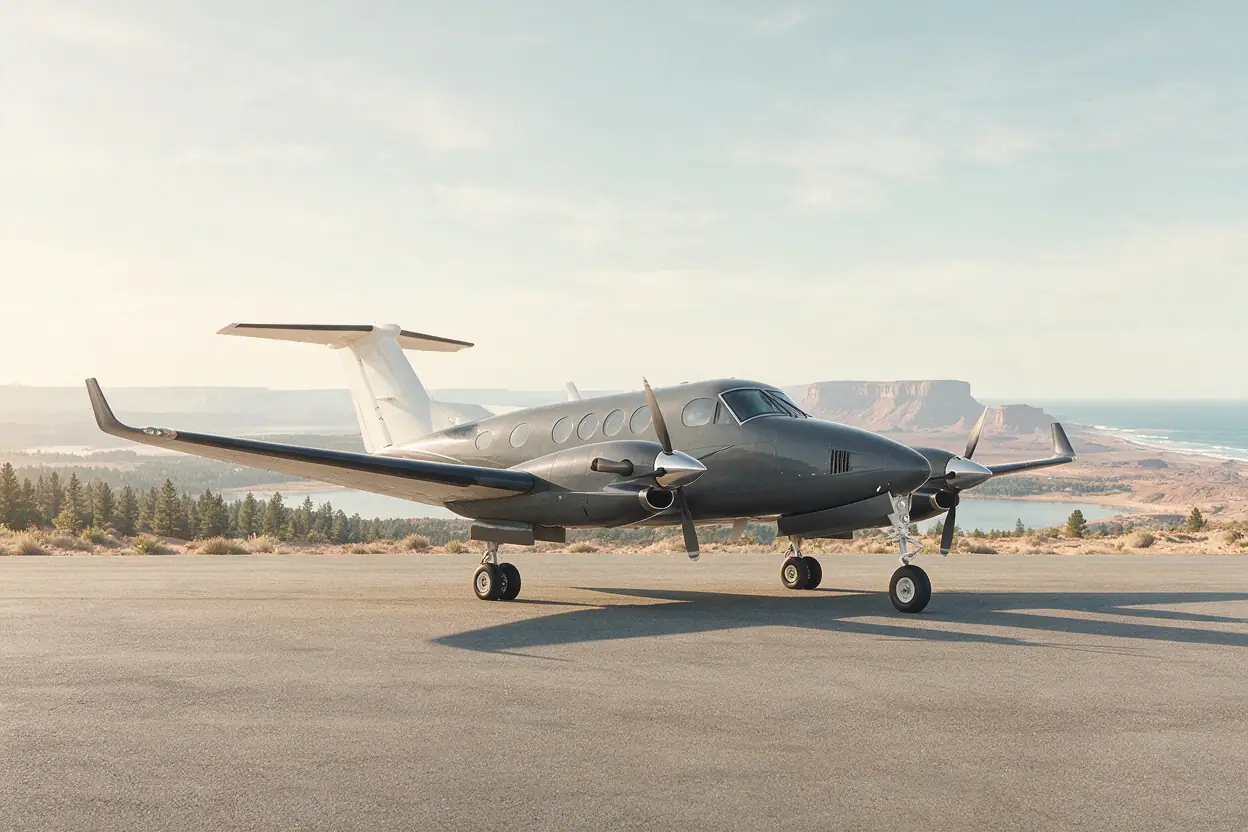
Private charter flight Washington, DC to New York
A private charter flight Washington, DC to New York covers 194 nautical miles, so the aircraft matters less than the hour you leave. Turboprops make it in about 0h 59m. What you buy on a hop this short is a schedule you set yourself.
- 194 nm223 sm
- 0h 59mturboprop flight time
- $2,200–$3,500one-way quote
Washington, DC to New York private jet costs by aircraft type
Flying private from Washington, DC to New York is 194 nautical miles, about 0h 59m on a turboprop, quoted near $2,200–$3,500 one way.The figures below are estimates for the whole aircraft on a one-way leg, gathered from quotes on this route and not firm prices. They move with aircraft availability, crew duty hours, ground handling and the day you fly. Read the times as block time, gate to gate, and the cabin classes as a ladder rather than a verdict.
| Class | Flight time | One-way ballpark | Notes |
|---|---|---|---|
| Turboprop | 0h 59m | $2,200–$3,500 | Best suited |
| Light jet | 0h 46m | $4,000–$6,000 | No fuel stop |
| Midsize jet | 0h 46m | $5,200–$8,000 | No fuel stop |
| Super-midsize jet | 0h 44m | $7,200–$10,000 | No fuel stop |
| Heavy jet | 0h 44m | $9,500–$14,500 | No fuel stop |
Ballpark figures are for the whole aircraft, not per passenger, and exclude federal excise tax and segment fees. Duration covers taxi, climb and descent.
Flying Washington, DC to New York commercial or private
Airline figures are the cheapest fares Google Flights listed for a single traveller on Dec 9, 2026 (pulled Nov 15, 2026); the charter line is our estimate for the entire aircraft. With 8 passengers, airline first class seats come to roughly $1,712, versus $2,200–$3,500 to charter the entire turboprop.
| Choice | Airline / aircraft | Hours | One-way ballpark | Seat share |
|---|---|---|---|---|
| Airline economy | JetBlue · nonstop | 1h 12m | $144 | $144 |
| Airline first class | Delta · nonstop | 1h 16m | $214 | $214 |
| Turboprop | Entire aircraft, seats 8 | 0h 59m | $2,200–$3,500 | $280–$440 |
Airline ticket prices shift daily and do not cover bags above the fare allowance; the per-seat charter number presumes all seats are occupied.
When prices and demand peak
If you fly on a Monday morning or a Thursday afternoon, then expect the widest spread between the low and high estimate, because those are the hours when business travel on this corridor is heaviest. The same applies to the return leg on Friday afternoon, when aircraft reposition north and south along the coast and the cheaper turboprops get taken first. Booking several days out gives you a pick of the fleet on this Washington to New York route rather than whatever is still parked.
If your trip falls during the fall UN General Assembly week or the December holidays, then the New York end of the route tightens up and slot times at Teterboro become the constraint rather than the price. Summer afternoon heat can reduce how much a smaller turboprop can carry out of a short runway, so an early departure is worth asking about if you are a full cabin with luggage. On a 194-nautical-mile leg, crew time and positioning decide most of what you pay, which is why the fuel bill is a small part of the invoice.

Leaving Washington
Most departures leave from Washington Dulles International Airport, whose 11,500-foot runway takes any aircraft in the fleet. Ronald Reagan Washington National Airport is closer to downtown but has a 7,169-foot main runway, which suits turboprops and light jets comfortably and can limit heavier types. If your meeting ends near Capitol Hill, the shorter drive to National often outweighs the longer runway at Dulles.
If you are flying out on a weekday morning, then plan for the Capital Beltway to be the slowest part of the trip, not the airport. Arrive at the general aviation terminal, clear the FBO lobby, and you are usually airborne within a few minutes of your slot. Ask your broker which airport the operator prefers before you fix the car time, because the answer can change your departure by half an hour.
Arriving in New York
Teterboro Airport is the default arrival for Manhattan, roughly a dozen miles across the Hudson, and its 6,997-foot runway handles turboprops and most jets with room to spare. Westchester County Airport in White Plains is the alternative for meetings in the northern suburbs or lower Connecticut, with a 6,549-foot runway and a shorter drive to Greenwich and Stamford than any Manhattan airport.
When your destination is Manhattan below Midtown, then Teterboro plus a car is usually the quickest combination, though the Lincoln Tunnel can undo that at rush hour. If you are heading to a university, a hospital or a client in Westchester, then White Plains saves the city traffic entirely. Either way you avoid the commercial terminals and their security lines, which is where the real time saving sits on a route this short.
| Field | ID | Rwy |
|---|---|---|
| Teterboro Airport | KTEB / TEB | 6,997 ft |
| Westchester County Airport | KHPN / HPN | 6,549 ft |
| Washington Dulles International Airport | KIAD / IAD | 11,500 ft |
| Ronald Reagan Washington National Airport | KDCA / DCA | 7,169 ft |
How the turboprop suits this route
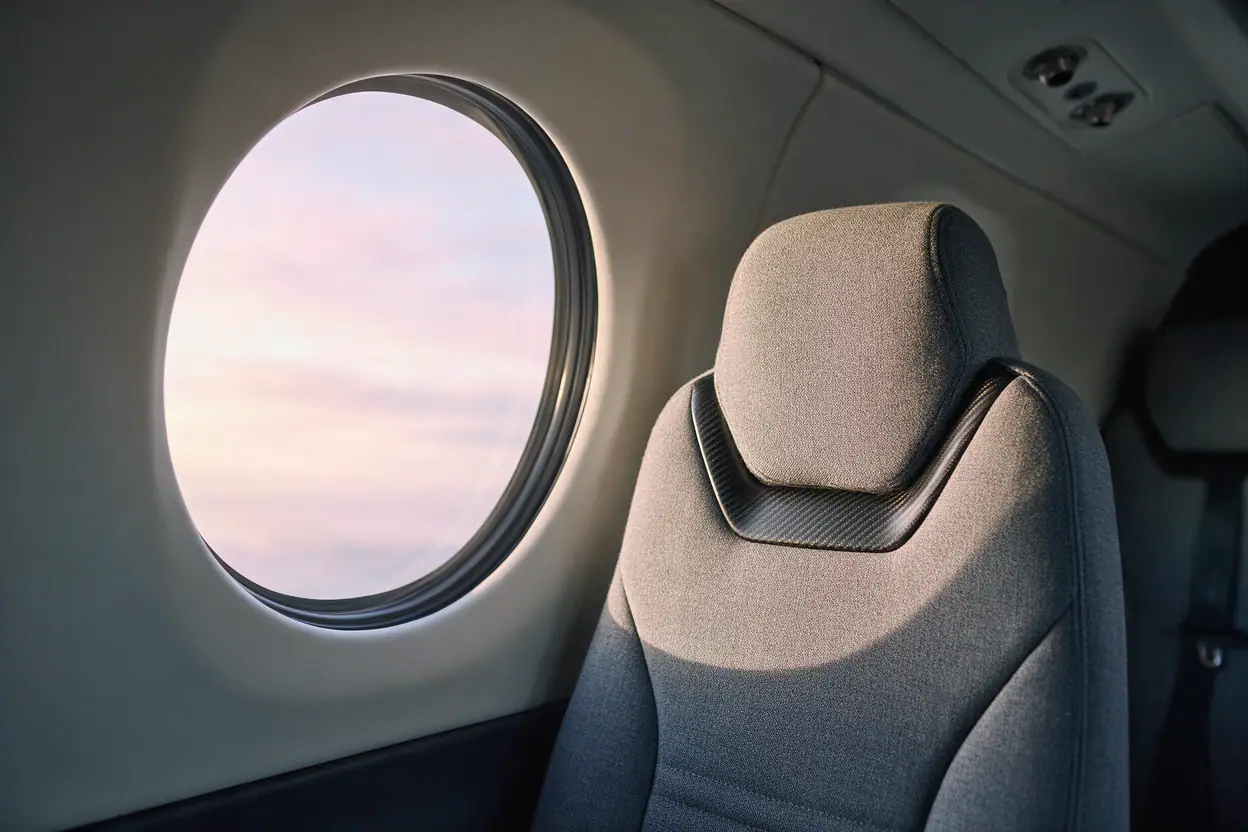
A turboprop is the sensible choice on 194 nautical miles, and it is why it heads the table. The Daher TBM 960 carries six and cruises at 330 knots; the Beechcraft King Air 350i seats eight with 55 cubic feet of baggage. Neither spends long enough at altitude for cabin size to matter much, so the lower hourly cost buys you flexibility instead of speed.
The light and midsize jets are the middle ground, trimming roughly ten to fifteen minutes off the turboprop without changing the shape of the day. Heavy jets cost roughly three to four times the turboprop figure for a leg where you may spend less time in the cabin than in the car to the airport. On the return leg the same logic holds, and a turboprop also opens up more airfields on the New Jersey side where runway length is tight.
Daher TBM 960
- 6 seats
- 330 kt cruise
- 1,730 nm max range
Cabin of 4 ft tall, 13 ft 3 in long. Luggage 32 cu ft.
Beechcraft King Air 350i
- 8 seats
- 312 kt cruise
- 1,800 nm max range
Cabin of 4 ft 9 in tall, 16 ft 8 in long. Luggage 55 cu ft.
Other private jet routes like Washington, DC–New York
The 6 private jet city pairs here span 158 to 279 nautical miles, with one-way turboprop quotes running $2,200 to $4,500.
Queries on this lane
How long is a private charter flight Washington, DC to New York?
Block time runs from about 0h 44m in a super-midsize or heavy jet to 0h 59m in a turboprop, with light and midsize jets around 0h 46m. That is the time between leaving the ramp in Washington and parking in New Jersey. Your door-to-door total depends far more on traffic to Dulles or National and the drive in from Teterboro than on the aircraft you choose. The flight itself is short enough that ground time at both ends sets your day.
What does a private charter flight Washington, DC to New York cost?
Estimates for the whole aircraft start around $2,200 to $3,500 for a turboprop, $4,000 to $6,000 for a light jet, and $5,200 to $8,000 for a midsize. Super-midsize runs $7,200 to $10,000 and a heavy jet $9,500 to $14,500. These are estimates, not quotes, and they move with availability, crew time and the hour you fly. Ask for the all-in figure including landing fees and handling.
Which airports serve this route?
On the Washington side, Washington Dulles International Airport has an 11,500-foot runway and Ronald Reagan Washington National Airport a 7,169-foot main runway. In New York, Teterboro Airport and Westchester County Airport are the usual general aviation arrivals, with runways of 6,997 and 6,549 feet. Teterboro suits Manhattan, while Westchester works better for the northern suburbs and lower Connecticut.
Can I make this a same-day round trip?
Yes, and a turboprop makes the tightest version work because the aircraft can wait at Teterboro while you are in meetings. With 0h 59m in the air each way, a morning out and an evening back inside one crew duty day is realistic. Build in slack for Manhattan traffic and ask your broker to price the return leg at the same time as the outbound, since holding the aircraft costs less than positioning a second one.
Is a turboprop or a jet better for this distance?
At 194 nautical miles a turboprop does the job well and costs the least, with the Daher TBM 960 carrying six and the Beechcraft King Air 350i eight. A light or midsize jet saves roughly ten to fifteen minutes and gives a quieter cabin. Only go heavier if you need the space, the baggage or a specific departure time that the turboprops cannot cover.
How far ahead should I arrange the aircraft?
Several days is usually enough for a turboprop on this corridor, and that window also tends to bring better pricing. If your dates land on a Monday morning, a Thursday afternoon or a holiday week, then start earlier, because the cheaper aircraft go first. Last-minute requests are possible when a plane is already positioned nearby, but the choice narrows quickly and the estimate rises with it.